Save Website Screenshots to Google Drive with Make.com

Written By Hanzala Saleem
Updated At July 02, 2026 | 7 min read
Written By Hanzala Saleem
Updated At July 02, 2026 | 7 min read
Taking a screenshot of a website by hand every day does not scale. Whether you track a competitor's pricing page, archive a landing page for compliance, or watch a dashboard for visual changes, doing it manually wastes time and leaves gaps in the record.
This guide fixes that. You will build a Make.com scenario that calls ScreenshotAPI to capture any URL, then saves the image to a Google Drive folder on a schedule you control. The setup takes about ten minutes, needs no code, and runs on its own once published.
To save periodic screenshots of a website to Google Drive, connect three parts inside a Make.com scenario: an HTTP module that calls the ScreenshotAPI endpoint to capture the page, a Google Drive module that uploads the returned image, and a schedule that runs the scenario at a set interval. No code is required. Once the scenario is published, Make captures the site on your chosen cadence and drops each screenshot into your selected Drive folder automatically.
You need three accounts and one API key to follow this guide:
Keep your ScreenshotAPI key nearby. You will paste it into the API query in Step 3.
Go to Make.com and create a new scenario by clicking the 'Create a new scenario' button. A scenario is the automated workflow that ties ScreenshotAPI and Google Drive together.
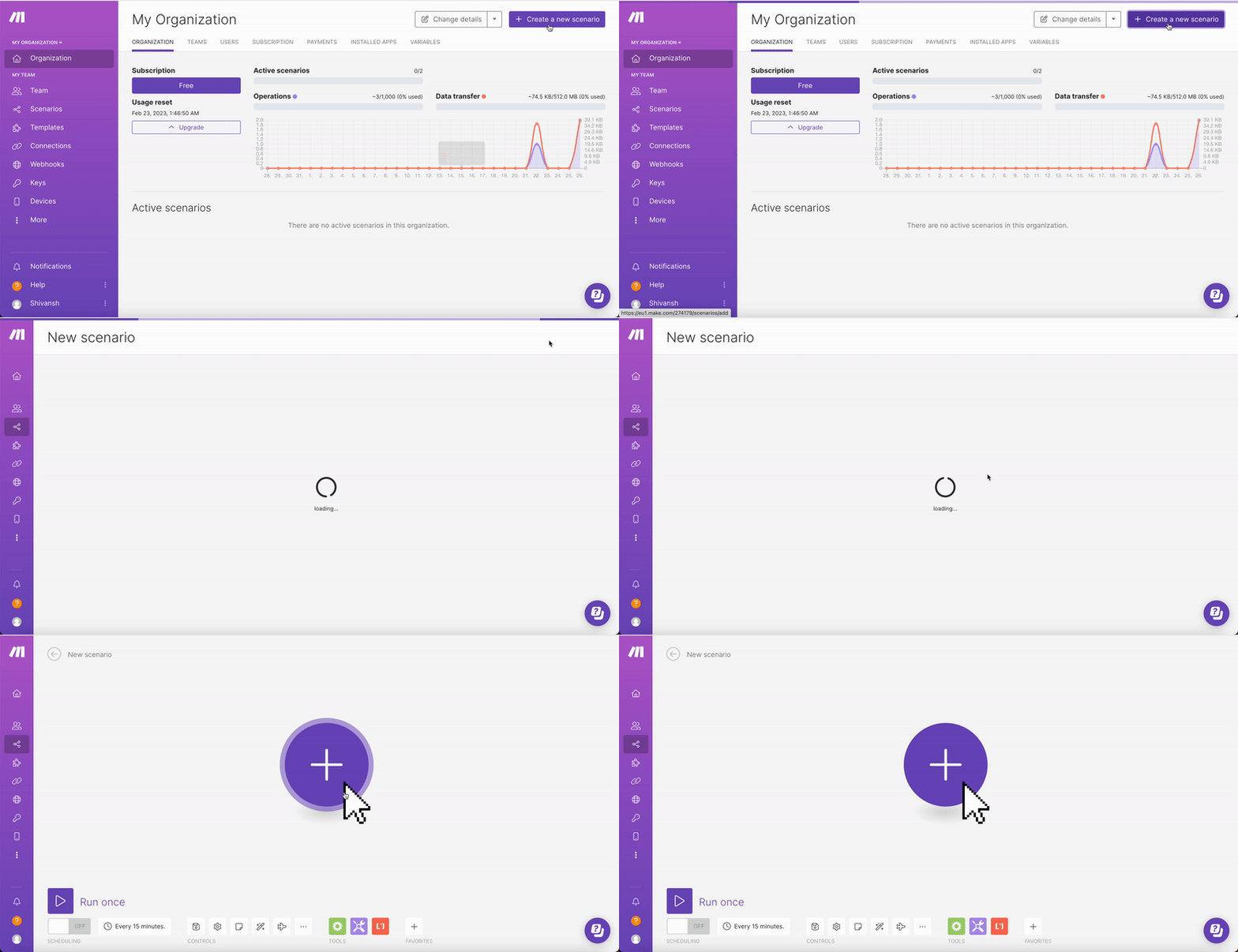
Click the '+' icon and search for the HTTP module. Choose 'Make a Request.' This module sends a GET request to the ScreenshotAPI endpoint, which is what triggers the capture. You can find the full list of request options in the ScreenshotAPI documentation.
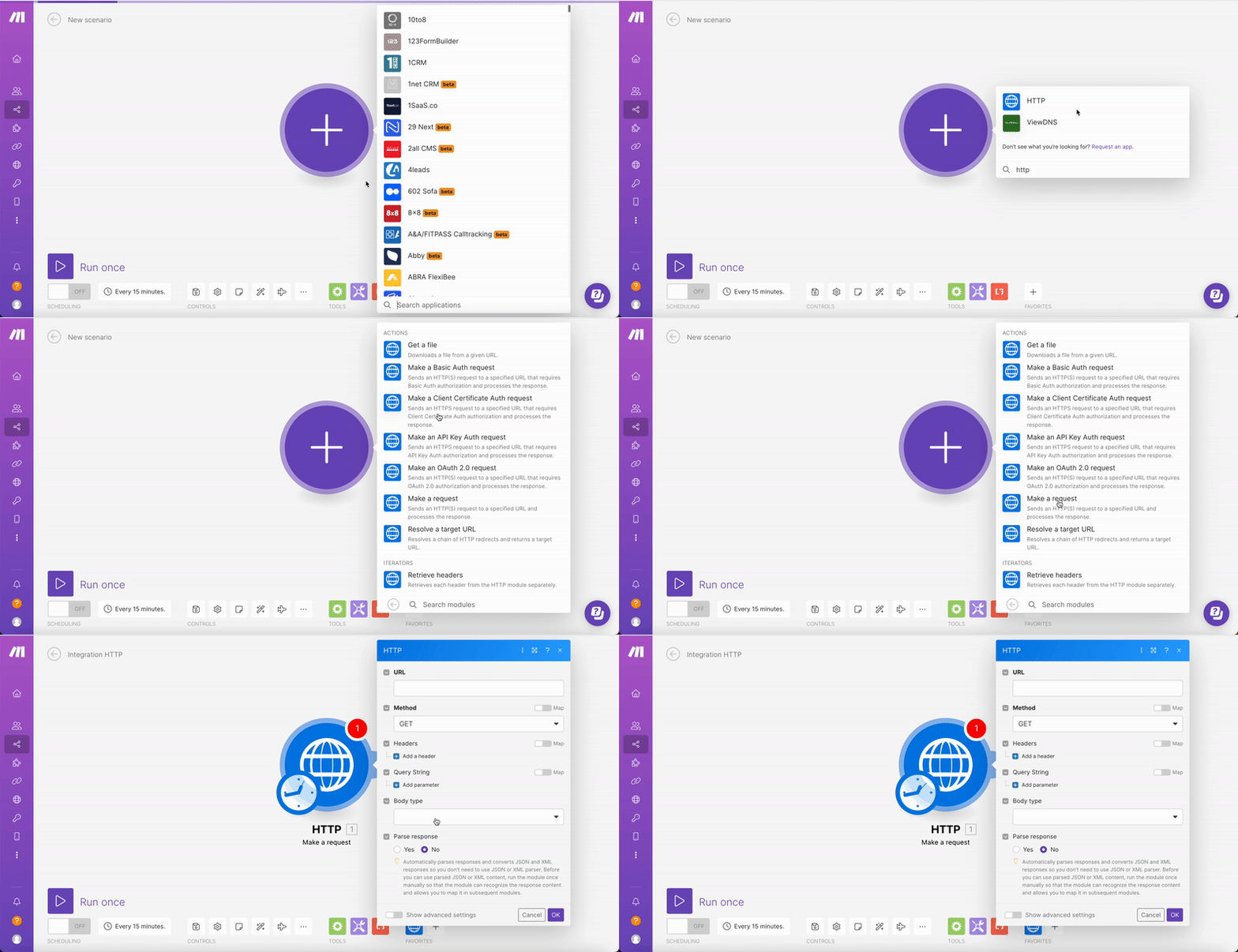
Open a new tab, create a free ScreenshotAPI account, then open the Query Builder. Paste the URL of the website you want to capture and set your options. The text inside 'Your API query' updates live as you change settings, so you can copy the finished query when it looks right.
A few parameters are worth setting before you copy the query:
output=image returns the raw image so Make can upload it straight to Drive.file_type=png sets the format. Swap in jpg, webp, or pdf depending on what you need.full_page=true captures the entire scrollable page instead of just the visible viewport.block_ads=true and no_cookie_banners=true strip ads and consent pop-ups so the capture stays clean.width and height set the viewport for responsive layouts.delay or wait_for_selector hold the capture until the page has finished rendering, which prevents blank or half-loaded shots.Copy the full query string once your options are set.
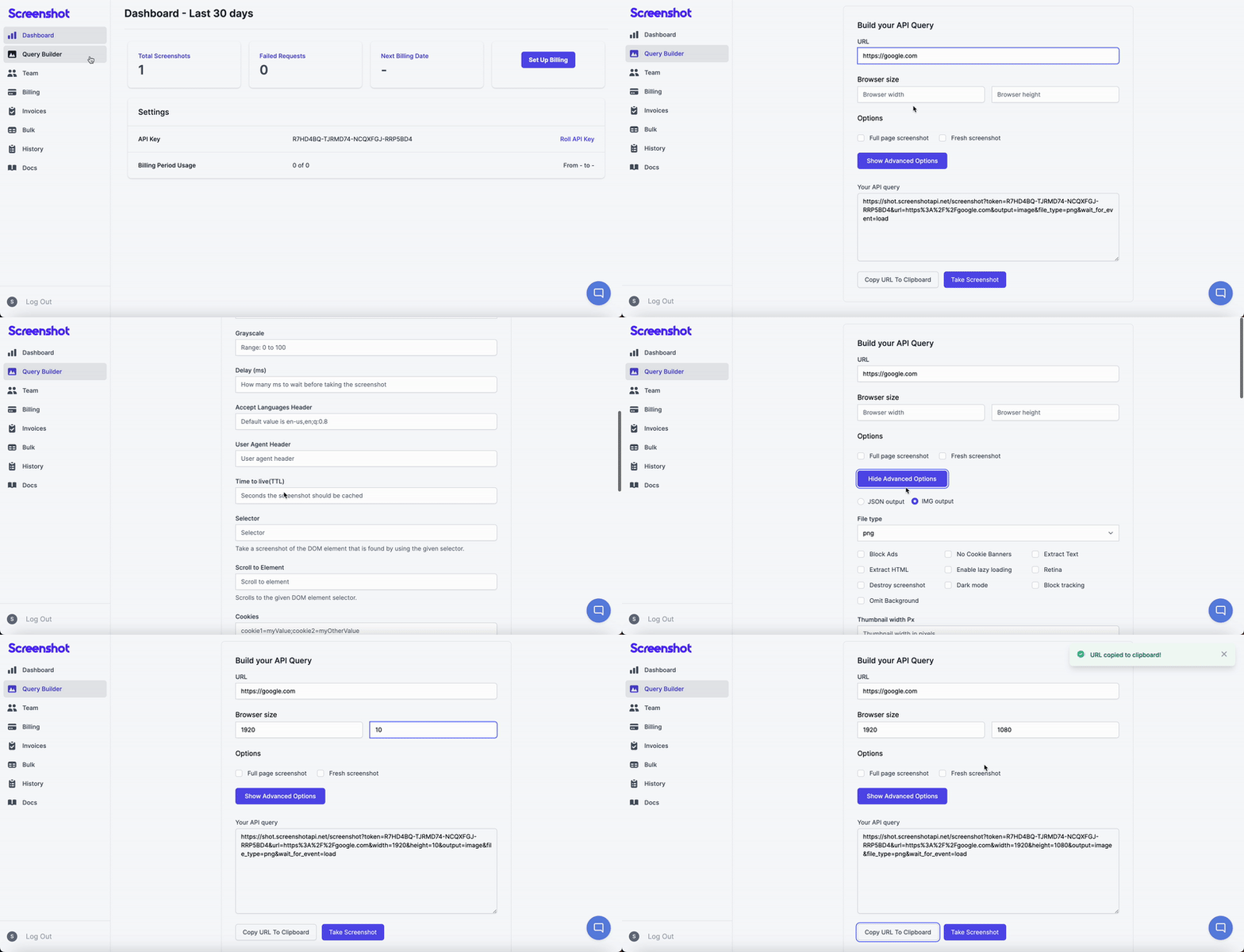
Paste the copied query into the URL field of the HTTP module in Make.com and click 'OK.' This triggers an HTTP call to ScreenshotAPI, which captures the page and returns the image to Make as the module's output.
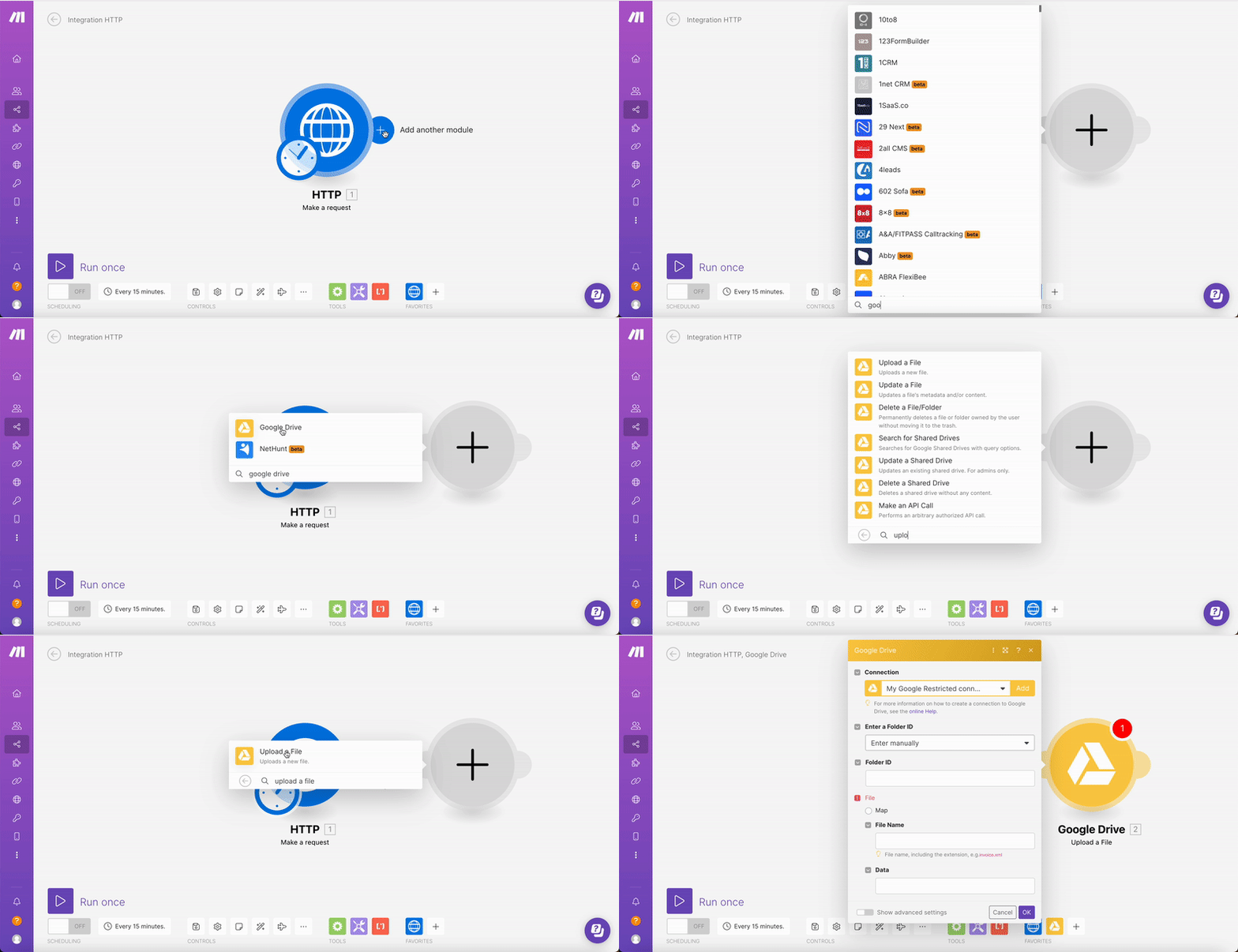
Click 'Add another module' or the '+' icon at the bottom right of the screen. Search for 'Google Drive' and select it, then search for 'Upload a file' and select that action. This module receives the image from the HTTP module and sends it to Drive.
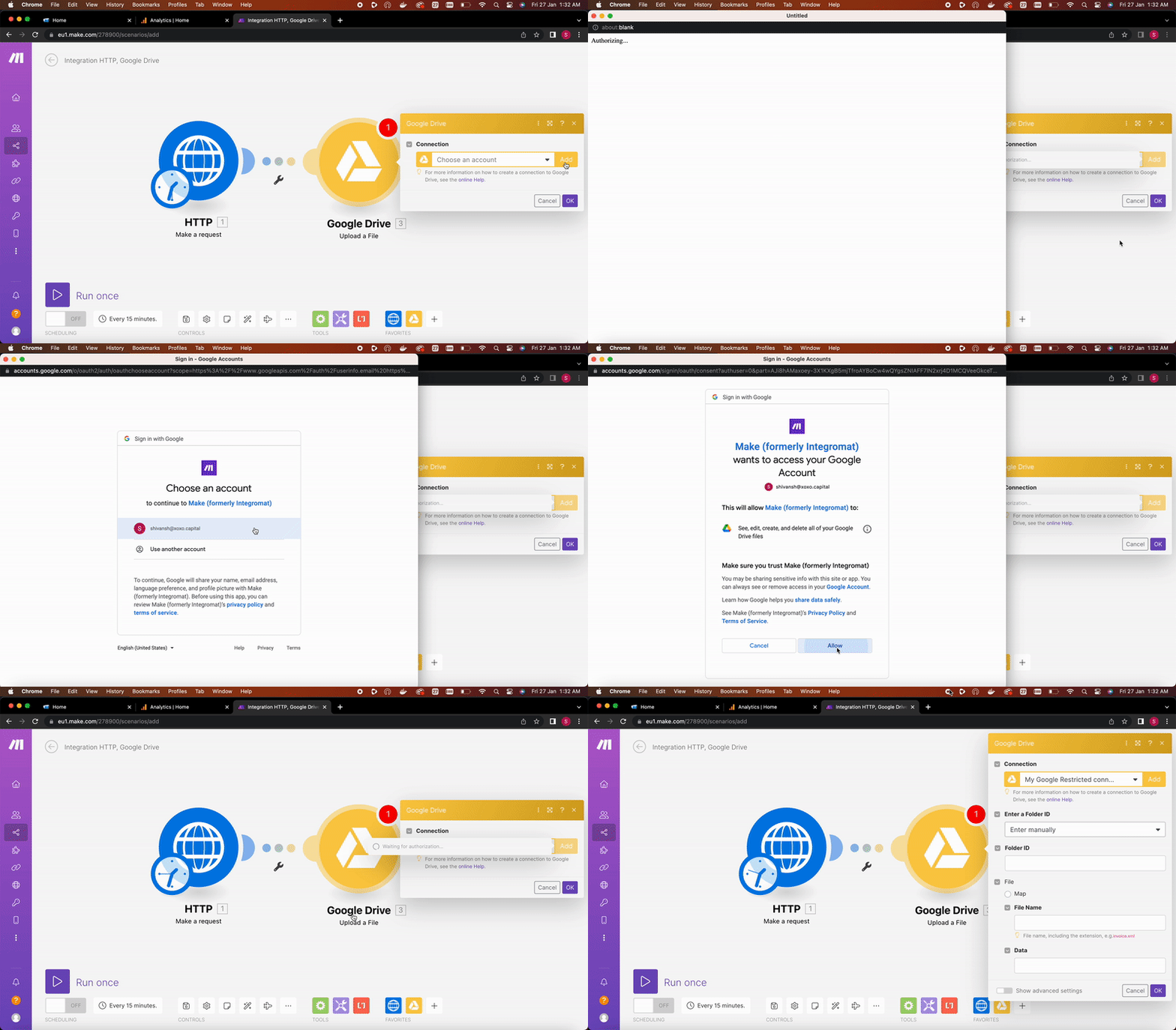
Connect Google Drive by allowing Make.com to access it. Click 'Add,' give the connection a name or leave the default, and hit 'Save.' Select the correct Google account and approve the requested permissions so Make can upload files on your behalf.
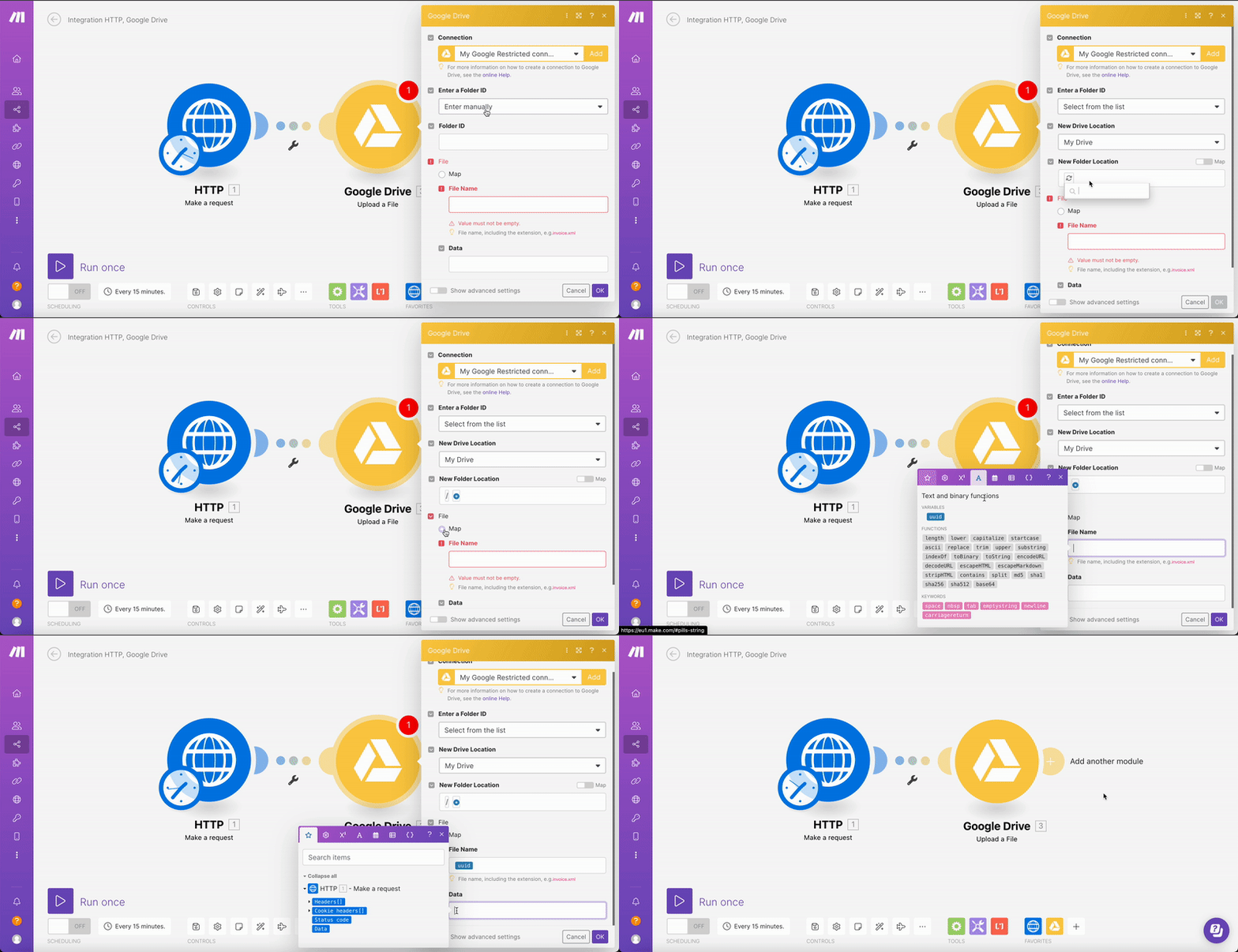
Select the Drive folder where the screenshots should land. Give the file a name, or map the UUID value so every run gets a unique file name. A unique name stops each new capture from overwriting the last one, which matters when you want a running history.
Click 'Run Once' to test the scenario end to end. If both modules turn green, open the Drive folder you selected and confirm the screenshot is there. If a module shows an error, check the Troubleshooting section below before you schedule the run.

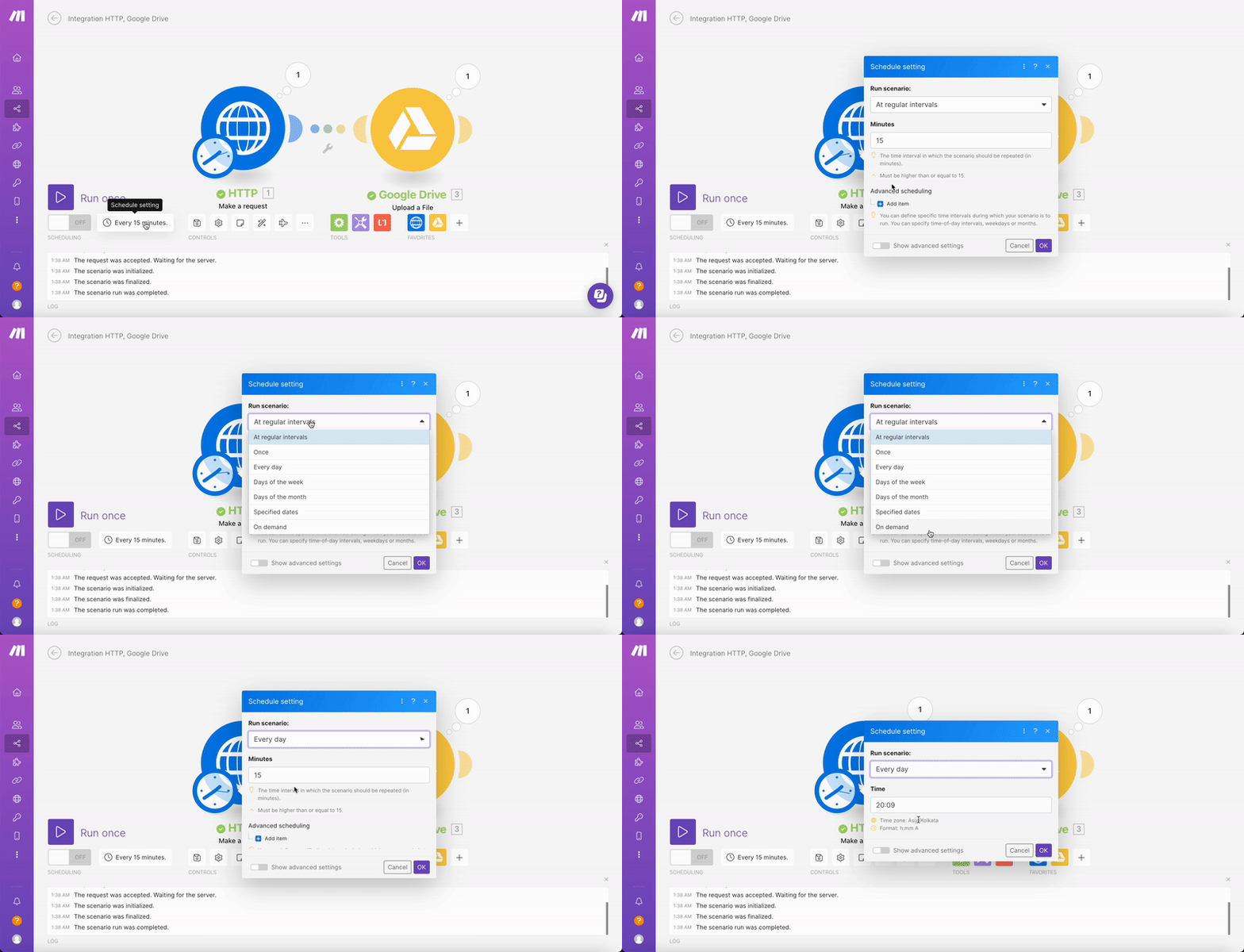
Set how often the capture should run. Click 'Every 15 minutes' in the bottom tray to open the schedule panel, then set the interval, days, and times you want. Match the cadence to your goal: every 15 minutes for live monitoring, daily for reporting, weekly for lightweight archiving. Hit 'OK' and turn the scenario on.
If you would rather keep screenshots inside your own infrastructure, ScreenshotAPI can deliver them straight to an Amazon S3, Wasabi, or Google Cloud Storage bucket without passing through Make's Google Drive step. Configure the bucket once in the Storage Integrations tab, then add byob=true, storage_service, and bucket_name to your API query. The capture lands in your bucket on every run, which keeps a single source of truth and avoids storing copies on a third-party Drive. This is the better route when screenshots contain sensitive data or feed a downstream pipeline.
Make is not the only way to run this. ScreenshotAPI works the same way inside other automation tools, so pick the one you already use.
| Method | Best for | Coding needed | Scheduling | Where captures land |
|---|---|---|---|---|
| Make.com scenario | Visual multi-step workflows | No | Built-in interval scheduler | Google Drive, Dropbox, Slack, and more |
| Zapier Zap | Simple trigger to action flows | No | Schedule by Zapier trigger | Google Drive and 6,000+ apps |
| n8n workflow | Self-hosted or developer control | Low | Cron node | Any node you connect |
| ScreenshotAPI native scheduler | Fixed captures without a third-party tool | No | Cron expression in one API call | Your dashboard or your own bucket |
The workflow above uses Make. If you prefer Zapier, the setup follows the same three parts: schedule, capture, upload.
The HTTP module returns a 401 or 403. Your API token is missing or wrong. Reopen the Query Builder, copy the full query again, and confirm the token value matches the key on your ScreenshotAPI dashboard.
The screenshot is blank or cut off. The page had not finished loading when the capture ran. Add a delay for animation-heavy pages, use wait_for_selector to hold until a specific element appears, or set full_page=true for long pages with lazy-loaded content.
The file does not appear in Drive. Recheck that the Google Drive module points at the right folder and that you approved the upload permission in Step 6. Confirm the HTTP module output is an image and that output=image is in your query.
Make stops running the scenario. You may have hit your plan's monthly operation limit. Lower the capture frequency in Step 9 or upgrade the Make plan.
And there you have it - you’ve just scheduled periodic screenshots with a bit of help from Make, ScreenshotAPI, and Google Drive.
Whether you plan to use them to monitor website compliance or competitor pricing like some of our customers or simply automate more of your IT tasks, you now have a simple formula that saves a lot of time!
Ready to get started? Try ScreenshotAPI for free!
No. This workflow uses Make.com's visual builder and ScreenshotAPI's HTTP endpoint, so you connect modules instead of writing scripts. You paste one API query into an HTTP module and connect a Google Drive upload module. The only text you handle is the query string that the ScreenshotAPI Query Builder generates for you.
Make.com schedules runs from once every 15 minutes up to specific days and times you set in the scenario's schedule panel. Lower plans have monthly operation limits, so choose an interval that fits your quota. For hourly or daily website monitoring, set the schedule to match your reporting cadence.
ScreenshotAPI returns PNG, JPG, WebP, or PDF, and Make.com uploads whatever the API returns. Set the format with the file_type parameter in your query. Use PNG for sharp interface captures, WebP for smaller files, and PDF when you need a print-ready archive of the page.
A blank or partial capture usually means the page had not finished loading when the shot was taken. Add a delay parameter for animation-heavy pages, or use wait_for_selector to hold until a specific element appears. For long pages, set full_page=true so the capture scrolls through lazy-loaded sections.
Yes. In Make.com you can swap the Google Drive module for Dropbox, OneDrive, Slack, email, or a database, and connect several outputs to one capture. You can also skip Make's storage step and route captures straight to your own S3, Wasabi, or Google Cloud Storage bucket using the ScreenshotAPI storage integration.


